Category: Uncategorized

  • On Being Female…In the Kitchen

    The first time a male friend told me to “go back to the kitchen,” I didn’t understand what he meant. As a nine-year-old, my view of gender was still pure; still equal. He had meant the comment as an insult, yet I took it as a compliment; I loved to cook! So of course, I wanted to go back to the kitchen. Unfortunately, snide remarks and jokes of that nature only continued as my male middle-school peers became more confident, though I was certainly not the only target. Gender biases are not new, but when I look back at that moment now, it frightens me to think about how ingrained these biases become in our culture from such a young age. The boys I went to school with had already internalized stereotypes about women being domestic and being in the kitchen, and felt comfortable enough to take part in making fun. They were eight or nine.

             The funny thing about being told to go back to the kitchen is how backwards it is when you compare it with how women in the culinary world are actually treated. Women are not urged to work in the kitchen, not celebrated or lifted up; not at all. Female chefs and restaurant workers are actually often ostracized, looked down on by their male colleagues and taken less seriously, a truth that reveals an entirely different kind of gendered stigma that women have had to fight to overcome. For some reason, men, historically, just don’t think women can cook high-end meals as well as men. And for a woman to prove that she can, she first has to be taken seriously by the males in charge. While the industry has come a long way in accepting women into fine dining and even awarding them with accolades and Michelin stars, the history of women in the kitchen has been complex and taxing. And while the push to the top to be fully accepted and acknowledged is still an upward climb, it has produced some badass chefs and incredible restaurants along the way.

    According to the Culinary Institute of America archives, from the moment fine dining hit the scene in the 19th century, women were kept on the outside. Similar to just about any other industry of the time, women were not seen as beings who were capable of hard or serious work; deemed inferior to men, by men. While society had no problem letting women cook at home for families, when it came to breaking into the restaurant world, they were told there was no place for them. The industry was a boy’s club, and allowing female chefs inside, no matter their talent, was relatively unheard of. However, cooking schools were more accessible to interested women, acting as a place where aspiring chefs could hone their craft and excel. Several even took on the venture of writing cookbooks after cooking school, like Fannie Merritt Farmer in 1896, who served as the principal of the Boston Cooking School. Still, cookbooks and cooking school didn’t seem to be enough to allow female chefs to break through the ranks. One of the few who did find her way to fame was Eugénie Brazier, a French chef who was the first to earn three Michelin Stars in 1933. Though it took several decades, the impact of even just one female chef receiving such high accolades told others in the industry that it was possible, even if the fight to get there would turn out to be brutal. So, these chefs kept working, slowly but surely making progress. With each new restaurant opening or award, female chefs were taken more seriously, proving their worth in the industry one step at a time.  

             It has taken well over a century to tear down some of the wall that has been put up to block women out of the kitchen. While now 20% of head and executive chefs are female, there is still considerable work to be done. Stigmas around who is capable of hard work in a kitchen are still ever present, along with biases about if women are mentally and emotionally tough enough to fit in with male chefs. The industry also has a pervasive sexual harassment problem, perhaps not surprising when considering that there are few females in a given restaurant, working alongside dominating men with large egos. The culture, which was called out during the #metoo movement has certainly been brought to light. Famed personalities like Mario Batali and John Besh have been publicly shamed in the industry, but the knowledge that this harassment exists doesn’t make things easier for women. It is just another reminder that women can’t be in complete control of their own bodies, men have to assert themselves, even in an industry where the work is so rigorous and taxing that every chef is proving they belong every single day.

    Padma Lakshmi, now a household name known for her role on Bravo’s Top Chef and for her own Hulu series Taste the Nation, began writing her first cookbook in the 90s. An immigrant from India, Lakshmi grew up in the US reconciling the mixture of cultures surrounding her while also struggling to be taken seriously as a woman of intellect in the working world. She began modeling at 21, something she used to launch her 1999 cookbook, which opened the door to a career in food. After several successful shows, cookbooks and articles, Lakshmi is a food icon now, but it wasn’t always this way. She has noted in several interviews that in the early days of her career, and even now, many men in the industry didn’t take her seriously. One New York Times writer, who was reviewing the second season of Top Chef, criticized Lakshmi and her outfits, rather than focus on her pedigree with food. Being a person of color and a woman, she has also explained in interviews, made it even more challenging to be truly seen for her talent. She even told the New York Times that she had trouble selling her show, which ended up on Hulu, for a long time, as if no one would take her seriously despite having proved herself for decades. Despite these challenges, Taste the Nation has blown up, collecting rave reviews from fans and foodies alike. Lakshmi uses the show to discuss her own experience rising in the industry, but also works to break down cultural barriers through food, helping to combat other negative stereotypes about the industry and the people who work in it. She has also spoken out several times to advocate for more diversity, within gender and race, in the industry.

    Kristen Kish, a contestant on season 10 of Top Chef, was the first woman of color to win the show, beating twenty other acclaimed chefs for a huge cash prize and a feature in Food & Wine Magazine. Having worked under Barbara Lynch, a legendary Boston restaurateur, Kish was already a powerhouse and revered in the food community, but after leaving the show with a victory, she knew she needed to walk away from the traditional confines of a fine dining restaurant. Similar to a lot of younger chefs her age, Kish grew up watching chefs cook on TV and felt inspired to do the same. She went to culinary school and worked her way up through the ranks at restaurants. In an interview with NBC, she noted that every restaurant she had worked at prior to joining Lynch’s team had been male run. It impacted the way she saw the industry and made her lack confidence. After joining Lynch, who urged her to go on Top Chef, Kish won the season and became a household name. But upon returning to Boston and the restaurant, Kish explained that men were still getting in her way. She told NBC, “A particular male chef in the city I was living in started running his mouth that I slept with him to further my career. I never worked for him a day in my life and I’m also very gay.” Kish went on to say, “It’s a way of making women feel less than. It’s just so disappointing — can’t someone just be happy, rather than taking the thunder? That was the first hit of major reality.” Kish left Lynch’s restaurant shortly after that, but instead of letting it knock her down, she used the experience to push the industry forward. She opened her own restaurant, Arlo Grey, where 60% of the staff is female. She is also currently taking part in a documentary series centered around women in the restaurant workplace, using her platform to speak out against the culture that at times kept her back.

    I mention Padma Lakshmi and Kristen Kish because they were who I grew up watching. As a child obsessed with cooking, my mother got me hooked on Top Chef before I even hit middle school. With every new season of the show, I had my personal favorites of course, but Padma and Kristen have always remained my inspirations and idols. They are the ones that urge me to cook and think like a boss. Like a powerful and strong woman. Through the years I watched Padma in awe as she tasted and judged contestants and their creations with a poise and knowledge that I yearned to have. And when Kristen came on the show in 2013, I felt like I had a personal stake in her journey over the course of the season. Maybe it was just because she worked in Boston and I was from Boston, but I think it was something about her drive and spirit and quiet concentration that drew me in. I wanted to be like her. I wanted to thrive the way she did. I got to watch countless women, like Kristen, beat their male counterparts in competitions every single episode. And I got to watch Padma send men home for making mistakes. Top Chef showed me female power.

             TV personalities and chefs were not the only people who inspired me to love to cook. When I think about my first memories in the kitchen, I think about Hanukkah. My grandmother and mother are both great cooks, and every December, my family would gather around a small electric pan and add dollops of latke mixture into hot vegetable oil. The smell would linger on our clothes and penetrate every corner of the house for days, but the latkes made all of that worth it. Crispy and slightly greasy, but filled with warm and indulgent goodness, my younger self couldn’t get enough of the latkes we made. And now, when I think back to those memories, I remember watching my mother and grandmother delicately grate potatoes and onions, crack eggs and sprinkle salt. I remember the making, not the eating. Perhaps it is because I have grown up appreciating the care the women in my family have put into preparing food, or perhaps it’s because I grew up wanting to be just like them. Whatever the reason, they were the ones teaching me new recipes and letting me lick the spoon. They instilled a belief that cooking can heal and soothe and bring people together, just like their latkes did every year on Hanukkah.

             It has taken me a long time to figure out what I want to do with my life, and I am certainly no closer than I was a few years ago, but I have concluded one thing for sure: I need to be doing something where food is involved. For a long time, I thought that this realization meant I needed to be a chef and I felt a certain sense pressure as a result. I have never been the best cook. I love to cook, but I don’t consider myself very skilled. I questioned for years if the only path to a career with food was to be cooking. It wasn’t until recently that I realized the female chefs and experts in the industry that I idolize haven’t been kicking ass and proving their male counterparts wrong this long for me to just give up. Padma and Kristen and all of the women before them have not endured male-centered workplaces and battled every day to be taken seriously, just for me to shy away from doing what I want to do. Women like Ruth Reichl and Christina Tosi have taken non-traditional paths, creating brands centered around their own love for food in exceptionally new ways. I could be like them. Or I could be like Ina Garten and write a million cookbooks, crediting butter as a staple ingredient and inspiring home cooks to entertain more. Sometimes it’s hard to remember there are many avenues to get to where you want to be, but these women have shown me it is possible. So no, I don’t want to be a chef. I don’t even think I want to go to culinary school. But I will have a career in food. I will likely have to work even harder to stand out from my male counterparts, because that is the industry. Male dominance in the food world is not completely reversed and it may never be. Maybe I’ll be writing, or photographing, or styling, or scoping out the best new restaurants, but I’m going to make it happen. So yes, actually I am going back into the kitchen, just like those elementary school boys told me to do.

  • 8 Ingredients, 3 Meals, 1 Girl

    Let’s be honest. Cooking for ourselves on a busy weekday isn’t always a pleasant experience. At the end of a long day, I find myself dreading that question “what should I make for dinner?” And especially as a college student, meal planning and eating on a budget don’t always happen simultaneously. When you add all of that to a consistently jam-packed schedule, a piping hot gourmet meal isn’t easy to accomplish. I decided to do something about it! Inspired by an article I read about cooking with fewer ingredients, I came up with the perfect challenge: eight ingredients to make three different meals in one day. 

    So often, we forget that making delicious food doesn’t require a thousand ingredients. It makes sense, we live in a consumer culture where we take Instagram pictures of our meals before we eat them, put our names on the waitlist at every trendy restaurant and spend hundreds of dollars at Whole Foods just to buy organic. Food has become a thing to look at on social media, rather than a matter of nourishment and taste. I find it painful to scroll through a million recipes online, all with a laundry list of items and obscure ingredients. I simply don’t have the time or money or patience! And don’t get me wrong, I love that there are platforms to share what we are cooking, but sometimes I just forget that making dinner can be a simple and delicious task. I want to get back to the simplicity. No gimmicks, no expensive ingredients, no four-hour ordeal, just easy yummy food.  

    Though I was apprehensive at first about how I could successfully create three dishes and not get sick of the same ingredients, I came up with a list of versatile staples and decided to just go for it. Requiring only one grocery store excursion, a small budget, easy prep and healthy ingredients, these three meals can be put together easily, and are great for even the busiest of days, whether you are a college student or not. So, snap out of your typical depression meal, filled with Top Ramen and Cereal, and hit the grocery store. We’re making good food today and it won’t hurt your wallet!  

    Concocting a list of eight ingredients that could make three delicious and different meals was a bit of a daunting task. Before anything, I decided it was necessary to exclude pantry ingredients from my eight count; I’m not a foodie-satan after all and things have to actually contain flavor. I started by thinking about the things I love to eat, coming up with a short list of essentials. It helped to consider ingredients in categories, starting with proteins, grains and vegetables. 

    I began with breakfast. Breakfast is the best meal of the day and eggs are one of my favorite foods. Most mornings, I often crave a scramble when I wake up. Typically, I find that when I just make a couple of scrambled eggs, my stomach is grumbling a few hours later, which is especially awkward when you are sitting in the middle of English class and a stomach rumble erupts. (I’m shuddering just thinking about it.) So, I decided for this recipe, I would add some veggies to fill me up, plus half an avocado for some healthy fats. No stomach grumbles with this breakfast. 

    For lunch I decided to get creative, scouring the internet for fun and easy recipes to use vegetables in. Typically, I skip lunch on busier days and that does nothing good for my energy levels. If I have a chaotic afternoon, I usually arrive home feeling exhausted and starving, which I’m sure my roommates appreciate. To remedy this, I decided lunch needed to be packed with protein to fill me up. I chose a quick turkey burger, pairing that with homemade broccoli tots. Now I know what you’re thinking… broccoli tots? Disgusting. I’m here to tell you that you are wrong, broccoli tots are really damn good. Just try them, I promise. 

    Finally, for dinner, I knew I needed to consider what ingredients I would have left over from the day. Oftentimes, I am so burnt out from a school day that I have no desire to cook. I chose a fast rice bowl with lots of extra vegetables and a fried egg on top for my final meal, nothing fancy, but so tasty. If you are bad at cooking rice, this one may test you a bit more, but I swear if you follow the instructions on the back of the package, even the worst of cooks can make fluffy rice a reality.

    The Shopping List:

    1. One Carton of Eggs
    2. One Package of Ground Turkey
    3. Bag of White Rice
    4. Two Large Heads of Broccoli
    5. Box of Spinach
    6. One Onion
    7. One Bag of Large Carrots
    8. One Avocado

    Pantry Ingredients:

    1. Spices- garlic powder, red pepper flakes, thyme
    2. Bread Crumbs
    3. Parmesan Cheese
    4. Oils- olive oil, vegetable oil, sesame oil
    5. Rice Vinegar
    6. Soy Sauce

    Breakfast: Three Egg Scramble with Sauteed Onions, Spinach and Half an Avocado

    The Recipe: Dice a quarter of an onion and throw it in a small pan with some oil. Sauté the onions until translucent and add a handful of fresh spinach. While the vegetables are cooking, crack three eggs into a small bowl and whisk until thoroughly combined. Add your eggs into the pan with the vegetables, using a soft spatula to keep them from sticking. Add a sprinkle of parmesan cheese (if already in your fridge; that’s not cheating!) for creaminess. Stir your eggs around in the pan constantly until they are your desired consistency and doneness. Season with salt and pepper. Slice an avocado in half and remove the skin. Cut into small pieces and top with desired spices. I like mine with Trader Joes “everything bagel seasoning” (which is really just a glorified combo of sesame seeds, garlic salt and poppy seeds) and a sprinkle of red pepper flakes.

    Lunch: Quick Turkey Burger and Homemade Broccoli Tots

    The Recipe: Rinse a large head of broccoli and cut florets off. Chop florets until fine and add to a large mixing bowl. Crack two eggs into the bowl, followed by half a cup of breadcrumbs, garlic powder, two tablespoons of parmesan cheese (if already in your fridge) and lots of salt and pepper. Combine until smooth and evenly incorporated. Line a baking sheet with foil and spray or oil to create a nonstick surface. Using a tablespoon, scoop the mixture into small rounds and spread evenly on the baking sheet. Drizzle a bit of extra olive oil on top and place in a 400-degree oven for about 25 minutes. While the tots are cooking, combine one package of lean ground turkey meat with salt, pepper, garlic powder, red pepper flakes and thyme. Combine until smooth. In a medium pan, heat oil over medium. Using your hands, create medium sized patties and press onto the pan, each patty should be about an inch thick. Sear the patties for about five minutes on each side and check for doneness using a meat thermometer. 

    Remove tots from the oven when golden brown and firm. Add turkey burger and tots to a plate with ketchup and enjoy!

    Dinner: Asian Rice Bowl with Steamed Vegetables and Fried Egg

    The Recipe: In a small pot, pour in the desired amount of rice and add water per the directions on the package (usually 1:2). Let rice come to a boil and then cover with a lid and let simmer for about twenty minutes. While rice is cooking, cut remaining broccoli into florets, dice onion and chop a few large carrots. Add broccoli and carrots into a large sauté pan and cover with about a quarter cup of water. Cover pan with lid and let veggies steam until the water has evaporated. Add onion into the pan and some oil, sautéing everything until browned. Add a dash of sesame oil, a few glugs of soy sauce and a splash of rice vinegar. In a separate pan, heat oil over medium and crack an egg. Let the egg crisp until desired doneness. When rice is finished, fluff and add to a bowl. Add veggies and the egg on top, finishing the bowl off with a bit more soy sauce or hot sauce if desired.

    Good “It’s that easy?” you ask. Why yes, yes, it is. Eight ingredients that will make three stunningly different meals, all full of goodness and powerful flavors. While doing this sort of challenge every week may not be sustainable, it is a great reminder that there are always simple and delicious meals to make that won’t break the bank. Sometimes we just have to push ourselves to realize it. Challenging myself to limit the amount of ingredients I was using was daunting and even felt a little silly, but it opened my eyes to seeing how easy it is to prepare good food with low stress. I may not always be the best when it comes to getting creative with meal planning and time management, but I would call this eight-ingredient experiment a success!

  • Hunt + Alpine: Cocktails and Community

    Though it’s hard to believe now, for a long time Andrew Volk believed that working in the food and drink industry was only a pit stop in his career path. Then, he and his wife opened up Hunt + Alpine Club in Portland, Maine and introduced a world of innovative boozy drinks to the tight-knit and food-loving community. Situated in the middle of Market Street, the bar is a popular destination for locals and tourists alike, with a menu that literally has something for everyone. A tribute to the ski and hunting clubs they consider a touchstone of Northern New England, Hunt + Alpine has become a famed spot in the food world too, gaining the attention of countless magazines and food critics. Since 2013, Andrew and Briana have made a name for themselves by offering guests unique craft cocktails and Scandinavian fare in an inviting and cozy setting. A two-time James Beard semi-finalist for “Outstanding Bar Program” and named “Best Cocktail Bar” by several notable magazines, Hunt + Alpine is a testament to what happens when you mix a great customer experience with fantastic food/drink at the same time.

    ***

             A native of Vermont, Volk began thinking about food at a pretty young age, learning how to cook from his nana and spending ample time in the kitchen. In his family, food always seemed to be a priority, the center of attention, but he never realized how important it was to him during his younger years. He entered Colby College in Maine with the same unknowing mindset, where even though he spent time holding “iron chef competitions” with his friends in his senior year apartment, he never thought for a minute that he would end up making a career out of food and drink. 

    We spoke one afternoon over Zoom, embracing the new way of meeting one another during a pandemic. Seated in his office, Volk fit right in with the Portland vibe, clad in a laid-back plaid button-down, tortoise-shell glasses and a perfectly coiffed but rugged beard to match. He spoke of one particularly poignant memory during his college years, saying, “I didn’t realize it, but I remember visiting Fore Street [a famous entry in fine dining in Portland]. I remember exactly where I sat and what I ate.” Though at the time he couldn’t have realized a single meal at Fore Street would leave such an impact, he explained that those types of food memories helped to form his love of the industry and later pushed him to want to be a part of it.

    ***

             After college, Volk headed out to the West coast and assumed he’d not be back. Heading first to Montana and then to Portland, Oregon, he started bartending. Though he hadn’t intended on a job behind the bar post-grad, he laughed, “I was an international studies major at Colby… which I later joked about because I could read, I could write, I could think, I could bullshit really well, you know, you are perfectly qualified to bartend.” Despite applying and being accepted into law school, Volk struggled to find something that he felt attached to, and still bartending didn’t seem like his final destination. “When I got into restaurants in 2005, that wasn’t a career path. You did that until you figured out what you were going to do,” he said. When he finally landed in Oregon, the food scene was already big, and space for cocktails was growing. Before long, the bar he worked at was nominated by the Beer Foundation for “Outstanding Bar Program” and Volk started to realize this industry could actually be a good fit for him. But he wasn’t yet fully convinced. After meeting Briana in Oregon and a brief stint in Alabama, the two decided to settle in the “other” Portland, a place they both felt a connection to, having grown up in small New England towns.

             Arriving back in Portland, Volk said, “we sort of saw the same evolution that we’d seen in other cities, and it was 2011, where the food scene was phenomenal, beer was and continues to be some of the best in the country, but there wasn’t a bar that was focused on cocktails and spirits.” Finally, he found a bit of clarity. “[Cocktails] were what I learned, that’s what I knew, that’s what I had done in Portland, Oregon and so the elevator pitch of the business plan [that became Hunt + Alpine] was, ‘hey let’s open up a bar that focuses on cocktails and spirits. It was pretty much a no brainer.” Despite the fact that most other areas in the country had already hopped on the cocktail bar trend, Volk noticed that he had the upper hand opening one in New England. “Being from Northern New England, I feel pretty comfortable saying Vermont and Maine are very much five to ten years behind national trends. And that’s a good thing in a lot of ways, we get to pick the good stuff,” he said.

    ***

    From the get-go, Hunt + Alpine’s atmosphere was created to be one that is “comfortable for everybody.” Volk explained, “It [had to] make good drinks, but not give you the pretension that you can find in larger cities. That’s what we knew we were gonna be doing and I’d like to think we’ve done a pretty good job of that.” A good job is an understatement. Reception to the bar was electric from the start. “Pardon the pun, but there was a thirst for this,” Volk said.  The newbie’s integration into Portland wasn’t all smooth though, skepticism about their intent and possibility of success was clear in the community. “We got a lot of good luck, but I don’t know if this is gonna work for you,” he said. They had to prove themselves. One of the best ways Volk was able to prove just how special Hunt was, was by committing to his philosophy on food and drink.

    On the outside, Hunt looks like any normal “happening” Portland bar, with welcoming soft-lit windows, string lights and a fun logo on display. But once inside, the magic of cocktails takes over. “We have a way we present hospitality. I think there are a lot of different schools of thought, but for us, food and drink are not the point. The point is the experience. For us personally, we would rather have a great experience with whatever mix of food,” he said. “It’s much more about how you make people feel. But we also believe you gotta put good stuff in front of ‘em.”

    For many guests, this philosophy is clear the minute you walk through the door, as you are welcomed into a warm and cozy space, filled with customers dressed stylishly yet casually with drinks in hand. The bar is not a place for snobbery; you are part of the Hunt clan, able to chat with the staff and bask in the familial atmosphere, not sip champagne at a white-clothed table. The environment and attitude of Hunt’s staff helps to cultivate a mutual respect, and that respect works to give every guest an enjoyable and memorable experience with their friends and family. Famous media outlets from all over the country have also picked up on the unique Hunt experience that keeps customers coming back. In a Bon Appétit roundup of the “best food city” which highlighted Portland, the magazine named Hunt + Alpine, calling them “local favorites.” Just to name a few more, Architectural Digest dubbed Hunt the “best designed bar” in Maine, while Food & Wine called the bar a “hotspot.”   

    ***

    Collaboration, Volk said, is a huge piece of the bar’s success. His experience in the front of the house before opening Hunt was an asset, as was Briana’s expertise from working in advertising, but they looked to other professionals in the area to help write the food menu and create a fantastic array of cocktails. From classics like an Old Fashioned to funky specials like “Bonecrusher,” Hunt + Alpine has managed to collect a long list of drinks that reflect the passion of everyone who helps create them. “With the drinks, we love to hire people who are excited about what we are doing and give them opportunities to grow. It’s so much more fun that way, to have somebody else bring something they’re excited about and say ‘how do we make this drink perfect for what we want it to represent?’ Going through that process is so much fun. Seeing their pride…”  He paused, the admiration in his voice reminiscent of a proud parent.

    Another source of pride for Volk is his connection with the Portland food community. He explained, “everybody knows each other,” but more than that, “we always at Hunt try to create a sense of camaraderie, a clubhouse for the restaurant industry.” Unlike other restaurants and bars in the area, Hunt + Alpine was from the beginning open seven days a week until one a.m., enabling workers from other restaurants to come hang out after their shifts and grab a beer and some clam soup. “It’s pretty cool to know people and see their growth” Volk mentioned, referring specifically to watching places across the street, like Eventide (also owned by a Colby grad) launch their own success.

    ***

    Although Volk and Briana mostly focus on the business at Hunt + Alpine, they took on a new endeavor a few years ago, publishing their first book together, entitled: Northern Hospitality. The pair had always planned on writing a book together at some point; after all, Briana is a professional writer, but when a publishing house approached them, they jumped at the chance. “We wanted to create something where somebody could take a piece of Hunt + Alpine home with them, almost like an interactive business card.” Throughout the two hundred and something pages, stories from the bar, about the couple, and their philosophy on life, food and drink, are sprinkled between cocktail and food recipes for all palates, serving as a physical reminder of how easy it is to feel like a part of the Hunt family. Volk noted how nostalgic and proud it made him to go back through old menus and recipes from over the years, almost like a time capsule. And while the successful bar is already proof that the Volks are a talented and beloved couple in Portland, Volk said it is still a pleasure to see the book “out in the wild,” almost as if he sometimes forgets just how far he and Briana have taken their business and brand. 

    ***

    Now, with plans to open a new joint in Waterville, the Volks are looking forward to growing the business and taking on an entirely new opportunity. Even better, the restaurant will be operating out of a Colby-owned building, right on Main Street, allowing Andrew to give back to the place that shaped him. “Waterville has great restaurants, but room to grow and it’s a wonderful welcoming community, similar to the towns Briana and I grew up in. To us, Portland is still a city and Waterville is a really great community.” With Colby as their landlord, the Volks will open the doors to their more casual restaurant in the next coming months (COVID permitting). Colby students were thrilled with the announcement, excited to have a new spot to check out downtown, especially one with alcohol involved. Entering into the Waterville community will certainly be a professional and personal challenge, Volk admits, but his confidence in creating a cozy and lovely atmosphere for people within the community shines through. It will be a special full circle moment for Volk, ushering in a new era for Colby students, faculty and the greater Waterville community, to enjoy food just as much as he did during his own college years. And maybe a few cocktails too!

  • Chocolate Saves Lives

    The Make-a-Wish employees who helped plan out my wish told me right from the beginning that they had never had anyone ask for this before. Most kids wanted to go to Disney World, maybe meet a celebrity, take a trip to Hawaii. For me, my wish was a no brainer. I had never been one to turn down sweets, but chocolate was in a sublime category of its own. I would watch Jacques on the Food Network most nights that I was in the hospital, mesmerized by what he could create with just chocolate and creativity. I knew I needed to meet him, taste the chocolate he made, experience what a real chocolate factory was. So indeed, that’s exactly what I did. I wished to meet Jacques Torres, master chocolatier, and make chocolate with him all day long. It was the best day of my life. 

    ***

    “Mama!” I called from the bottom of the stairs, waiting again for her response after my third yell. I had already washed my hands, eager to snag a few chocolate chips from the shiny golden bag, laying open on the counter. I waited patiently in the kitchen, sniffing the fragrance of the translucent brown bottle that held our precious vanilla. It had become a ritual, inhaling the sweet scent before making our hot fudge. Just taking it out of the cabinet signaled it was time to make another batch and for me to throw on my apron. After a few minutes though, I couldn’t wait any longer for mom to get downstairs.

          “I’m coming, “I’m coming,” she laughed, finally emerging like a beacon at the top of the stairs, ready to start the official process of melting and whisking, while I mostly was excited for the licking of the tasting spoon.

    My mother used to refer to me as her sous chef, even though I could barely see the flames that lit our stove. I knew it was time to cook when she would hand me my red apron, stained with anonymous goo and schmutz from previous kitchen adventures, and grab the step stool from our dining room where it was stowed for most of the day. While baking was often the easiest way to get me involved, my mother let me help with whatever she was making if I felt up to it. Even if all I could do was pick the bitter leaves of parsley off of their sprig, she would find a small bowl for me to drop my plucked leaves into and set me up at the counter.

          Christmas time was my favorite part of the year, ironic considering my entire family is Jewish. And while we spent eight nights in December celebrating Hanukkah and making latkes, we still participated in holiday gift-giving. Yet The holidays became associated with one thing and one thing only in my mind: our hot fudge.

          As I watched the beautiful pale-yellow melt slowly into the pot, my mother measured out the cream in a Pyrex dish and pulled down a few glass mason jars from the top shelf. Seeing butter melt is a moment of pure bliss, where its change of state is so visually pleasing and smelled so delicious that I find my mouth watering with no effort at all. I poked the shrinking butter stick with my whisk, making sure the heat was evenly touching every part of the butter’s surface. When I looked over at my mother, her smile suggested that I was doing everything right. I shyly smiled back.

          “Let’s add our sugar in now and keep whisking,” she told me as I stepped back to let her pour the measuring cup over the pot, mesmerized by the cascade of sparkly crystals. I stirred with all of my might until my muscles ached, before passing the stainless-steel whisk to my mom to take over. The butter and sugar melded together gently, and before long it was time for the chocolate chips and cream. This was always my favorite part, the part where the deeply intoxicating aroma would start wafting through our open kitchen, lingering in the air for hours after the kitchen had been cleaned. My chubby toddler fingers reached out to feel the sensation of the falling chocolate as mom dumped the bag in, almost as if each single chip had magical powers and I needed to touch every one. The pot’s contents began to bubble hypnotically, making little popping and gurgling sounds as the chocolate oozed into the mixture. The sauce was almost complete; only a small drop of that fragrant vanilla was left to finish off the recipe, but my impatience was no match for an extra thirty seconds left on the stove. I grabbed my spoon and held it towards mom, unable to wait any longer to get a lick. 

          “Wait one more minute,” she said as she poured a perfect teaspoon of vanilla into the fudge before whisking it one more time and adding a few flecks of sea salt. My eyes widened with anticipation as she finally lifted the spoon from my grasp and soaked it in the sea of chocolate. She handed me back the spoon and I brought it to my tongue with precision, the kind of precision only “real chefs” are capable of. As soon as the warm gooeyness hit my tastebuds, I couldn’t help but grin. It was always astonishingly tasty, but this time felt different. In my head, my contributions were integral to the hot fudge making process on that day and I was in awe that I had helped create something so rich and delectable. I tasted my pride in each bite.

    ***

    I often remember parts of my childhood in terms of the food I was eating or at least dreaming about eating. I became a cancer patient at the age of three, where a majority of my days were spent in the hospital or at home, with little appetite and little energy. My diagnosis, Acute Lymphoblastic Leukemia, called for multiple rounds of chemotherapy, trial drugs and time away from school, all of which made my tiny body feel alien to me. It was hard to feel normal hooked up to beeping machines and IV’s and I resented the fact that while most of the kids my age were playing on the teeter totter at recess– my favorite on the playground– I was stuck with a hairless head, a laundry list of meds to take each day and a shot every Friday. 

    Despite not feeling hungry on most days during treatment, some of my favorite pastimes were watching cooking shows for hours and drawing pictures of the good things I longed to cook and eat. One of the games I liked to play best while sitting in the waiting room between appointments was “the grocery aisle game.” Though self-explanatory, it was the name I coined to describe the process of drawing the aisles in a grocery store on a piece of blank paper and then adding different foods to each aisle. A messy pile of green grapes, drawn in crayon, would accompany bright yellow bananas and navy blueberries in the “fruit” aisle while a misshapen carton of milk would find a home with scribbled orange cheese slices in the “dairy” aisle. The normalcy of drawing these common foods and pretending I was roaming around the aisles of a grocery store calmed my desire to escape the fluorescent lights in the waiting room.

    And on particularly gloomy days, even just hearing the upbeat theme song to the Barefoot Contessa on the hospital’s small TV could lift my spirits, transporting me to a world where I could host the most fabulous dinner party with the most beautiful flowers and delicious pot roast and gorgeous cake. I could wear a floral dress and heels and welcome all of my guests with homemade cocktails.

    Food occupied my mind at every moment. When the day came that I was allowed to come home and spend some time outside the confines of the sterile hospital and its linoleum floors, I jumped at the chance to be in the kitchen with my mom. The smell of roasted carrots and potatoes seemed to fill my house when I walked in the door after a hospital visit, a scent that still lingers in my nose to this day. Even if I just sat perched on the wood counter, too tired to move, the view of my mother artfully creating a meal out of anything, was enough comfort. Watching her stand over the stove, stirring a steaming pot of spaghetti or browning meat, felt safe. I was in my house again, but the kitchen was home.

    ***

    With about as little warning as when I had been diagnosed, suddenly I was in remission and free to do the things I had longed to do during treatment. In the years after going into remission, though I was grateful to get back to regular life, I felt like I was playing catch up. I joined every sport, took singing lessons, acted in school plays and tried to make as many friends as I possibly could, in what I now realize was an effort to make up for all of the time I had lost stuck in a hospital bed. Being sick for so long had made me miss out and lose time, but it had also convinced me that there was only one part to myself, the sick kid. Cancer had become such a part of my identity that I had no idea how to be anyone else. It felt like a secret I needed to hide, something that made me abnormal and weird and I hated it. Instead of feeling proud of how much I had overcome in just a few short years, I felt a constant need to forget and avoid. I just wanted to be the same as my friends, not the cancer girl. So, I did things that made me feel like I could fit in, out of desperation for normalcy. But nothing made me feel whole in the same way as interacting with food did.

    After a decade or so of making our hot fudge for holiday gifts, my mom and I decided to take a leap, sell the sauce and call it “Hannah’s Homemade Hot Fudge.” The proceeds all went to the Dana Farber Cancer Institute, where I had been treated, and for the first time, I felt like I had found a purpose. The decision to sell the sauce and the days we spent after, hunched over the stove whisking away, brought me right back to my happy place, a place I had always felt comfortable in, where there was no catching up to do, only tasting. Yet, the calming energy of hot fudge making also instilled a new feeling, a feeling of resiliency that I hadn’t realized before. Suddenly, cooking our sauce, watching chocolate chips fall into a pot in a hypnotizing cascade, whisking rich white cream into a thick mass of chocolate and butter and sugar, all felt like the culmination of how far I had come. Making hot fudge when I was sick had never been about just the sauce, it was proof that I could still do things, still enjoy life and sweets and being with my family despite the disease that was destroying my body. Making hot fudge pushed the fight I needed as a cancer patient, to keep my spirits up and remember that being sick was not the only part of my identity. The lingering smell of sweetness, of fat, of chocolate in the air was a direct reminder that I was healthy and that I had fought to become healthy. “Hannah’s Homemade Hot Fudge” became my badge of honor, my scar to help me recall the remarkable hardship I overcame as a child. And every time someone else poured a spoonful on a scoop of vanilla ice cream, it was like they were realizing this part of me too, somehow seeing me at both my most vulnerable and most strong. I could share my entire story through one little jar and without any words at all. 

    ***

    While we hit pause on our company as I entered high school and then college, the recipe for the sauce remained the same, always ready whenever I was. Recently, I channeled my four-year-old spirit and decided to surprise my best friend after she took the LSAT exam with a batch of Hannah’s Homemade. Having moved back to college for my final year in the midst of a global pandemic, I woke up at the first light most mornings, feeling unsettled and overwhelmed with how uncertain everything in my life seemed to be. Cooking at all was a great distraction, but it hadn’t eased my mind as much as I had hoped, making me feel lost in a way I hadn’t since finishing treatment. I had struggled then, trying to find something to remind me of who I was outside of cancer and I felt myself doubting who I was within all of the uncertainty of the world. In my new kitchen in Maine, I grabbed a pot from the disorganized mish mosh of cookware on the shelf, placed it on the stove and took a minute to survey my unfamiliar surroundings. There was no mom, no step stool, no dirty red apron or wood counter to sit on. It had been almost a year since I had made the recipe and I feared the magic wouldn’t feel the same without being at home in my own kitchen, surrounded by all of my happiest memories.

    Nonetheless, I turned on the stove and got to work. The sizzle of the cold butter hitting the warming metal immediately jolted something in me awake, prompting a muscle memory I didn’t know I had retained. With each passing second that feeling the familiar excitement continued coming back and I let it wash over me with relief. As I went to measure out the sugar, cream and chocolate chips, I began to remember just how good it felt to be making something so deeply ingrained in my body. Measurements felt unnecessary; my hands knew what they were doing, and I let myself continue adding the ingredients, elated at the start of my favorite smell in the world. Clenching the random tiny whisk that I had found in one of our drawers, I watched the pot and stirred as the familiar motion took over. I was on autopilot, just letting my brain tell my body to make the moves it needed to, no permission necessary. 

    When the time came for the chocolate to make its way into the pot, I reached out my hand, enjoying the familiar sensation of falling chips as they splish-splashed into the melted butter and sugar mixture. I stood over the heat and continued to stir, nearly looking to the side to see if my mother was nodding to me in approval. Stirring and stirring, I breathed deeply to inhale the notes of cocoa and sugar and butter that I hadn’t smelled in so long. I stared down at the glossy chocolate sauce and just let myself be. No thoughts of the pandemic, of schoolwork I needed to do, problems with friends, just a quiet moment over a pot of chocolate.

    With each passing moment and the scent of chocolate wafting through my nostrils, my bones felt looser and longer, my mind clearer; a therapy session I didn’t know I needed. Finally, while I added in the vanilla and salt, I realized how much I had missed chocolate. Not because I hadn’t been eating chocolate at all, but because I hadn’t truly been tasting it, at least not the way it tasted when I eventually took a bite of my finished hot fudge. It tasted like my prideful four-year-old grin, bringing me right back to the days of being my mother’s sous chef. It tasted like every good day during treatment, where just one bite of sauce could transform my mood, all folded into rich notes of cocoa, vanilla extract and the perfect pinch of sea salt. I could see my bald head, puffy cheeks, chocolate on my face, but none of it mattered because the smell only reminded me of happy times. Even on my sickest days, this hot fudge sauce gave me life. This taste was implanted in every part of me, I had just forgotten to look for it. It was a necessary reminder, especially during such a time of uneasiness, that taking a moment to slow down and really savor could make all the difference. It was as if standing over that stove again allowed me to channel all of the feelings my younger self relied on during treatment to get through the hardest days. I relied on chocolate then and I could still rely on it now. Finally, a fifteen-minute activity brought me all the calm and joy I needed. 

    ***

    I went back to the clinic where I was originally treated for my annual checkup around my thirteenth birthday, and I brought a check. Every dollar from every jar of Hannah’s Homemade Hot Fudge went directly back to the people who had saved my life and brought joy into it, even at my lowest. The money wasn’t much, maybe a few hundred dollars, but I didn’t care. There was something so fulfilling in handing over that check and knowing I had made an impact, even if it was a tiny one. I got to tell my story through my fudge, share it over and over again, and give that money back to the place where I grew up. At the time, I didn’t realize why it felt so good. Now I know it’s because I finally felt pride. I finally owned my history and owned the part of myself that I had always been quick to hide away. I gave away the check and finally my sickness wasn’t a weakness anymore, it had led me to do something valuable. I had gotten to cook and raise money for something I believed in, and I had gotten to own my identity; cancer and all. Eating chocolate along the way didn’t hurt either. Nothing could be better than that.

  • The Stickiest Sticky Buns- a Foolproof Recipe

    The Stickiest Sticky Buns- a Foolproof Recipe

    As we enter another week of the new normal- that is, quarantining and social distancing- I figured now would be the right time to introduce the best sticky buns ever. Though sometimes considered the cinnamon bun’s less popular sibling, I have always had a love for sticky buns and their decadent caramel gooeyness for as long as I can remember. This recipe in particular has the most buttery puffy dough, and then takes caramel, pecans and brown sugar, and stuffs them all inside. While I would say be careful how many you eat, because they are intensely addictive, we all know being in quarantine has completely wiped out any sense of normal willpower.

    With that, we will commence part 1 one of the sticky bun journey. I began looking at recipes with my lovely older sister, who loves to bake and is stuck here in MA with our family while her home in NYC has been dubbed “corona central.” We settled on a recipe posted by the infamous Crumbs and Nibbles, otherwise known as Alaina Chou, my younger cousin who actually has baking blog clout. The recipe was quite straightforward, make the dough, proof the dough, roll the dough, make the caramel and the sugar topping, put it all together in a baking dish, proof overnight, let rest for an hour and stick it in the oven! My sister and I did all of that, but hit a few bumps along the way… namely… overdoing the caramel. This, I must admit, was mostly my fault because I looked up the wrong temperature for caramel and we basically took it 20 degrees farther than it should have gone and so it set up super hard. Despite this, we kept going and went along with the rest of the recipe anyway. The next day, the buns came out at about a 6/10. The caramel set very fast and left a hard coating on the buns that didn’t allow for any gooey or oozy action that you want in a sticky bun. They tasted buttery and sweet despite the caramel fiasco, but we decided we wanted to make some tweaks and try again.

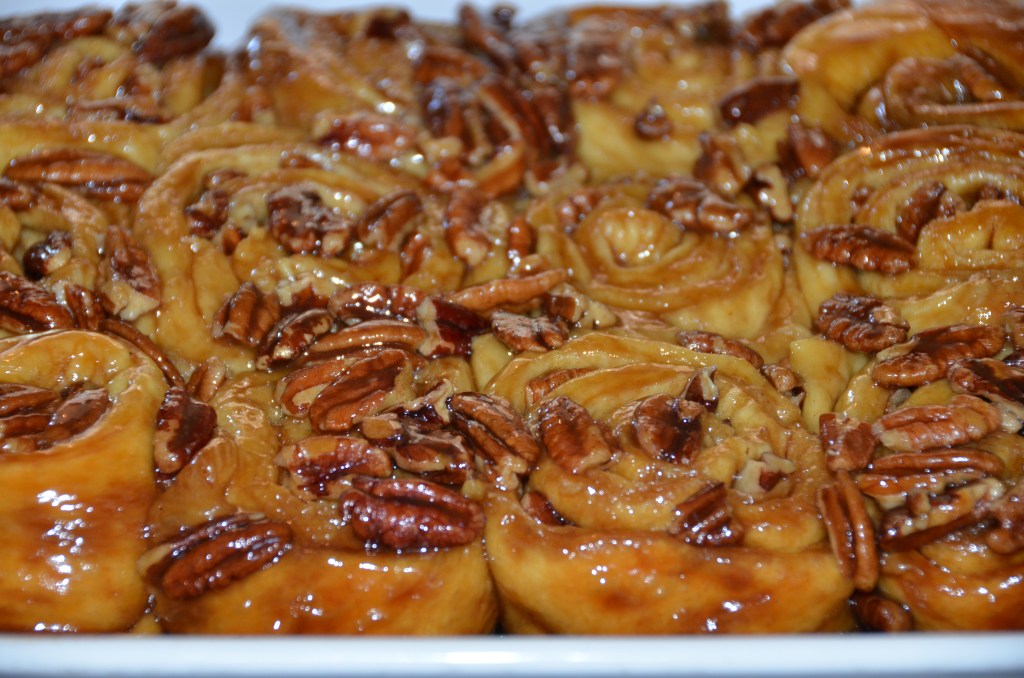
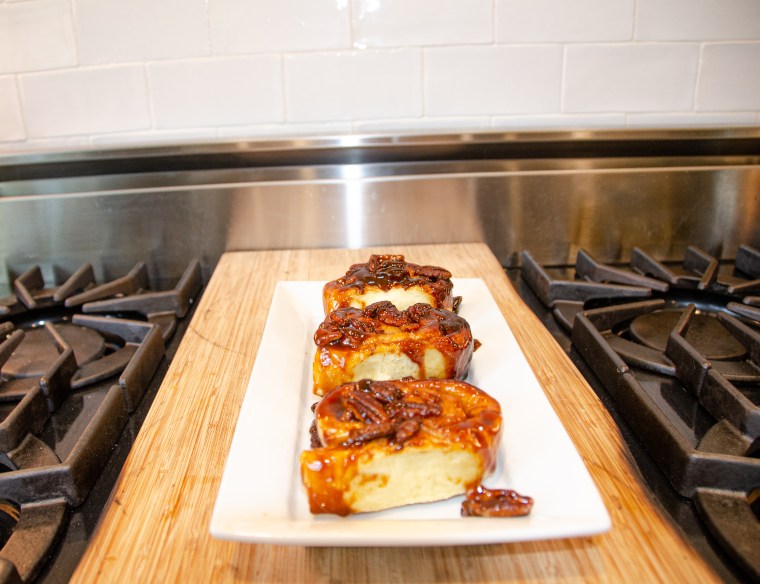
    Here are the first batch of buns. You can tell the caramel is too dark… they’re still cute though.

    The thing about baking is that trial and error is usually a part of the process, something that can be frustrating at times but necessary. Yes, baking is precise, but it also requires a certain level of patience to test out new ideas and get things right. I am no expert when it comes to baking and certainly not what many would consider a very patient person, but making a new batch was completely worth the extra labor. Not everything can be perfect the first time, or second, or third, but I’ve realized it’s important to keep pushing and working until you’re satisfied, it’s how you learn. The journey continued the following week where we took stock of what worked the first time and what we wanted to continue working on. I should start by saying if we hadn’t burned the caramel the first time, these would have come out amazing without any tweaks. But we figured, since we were giving it another go, we might as well experiment a little. We decided to keep the dough exactly the same, because it was perfectly airy the first time. First on the list was cooking the caramel at the proper temperature (about 230 degrees). We both agreed that we wanted more sugary filling than the first time because, so we went a little off book and followed a different recipe, but doubled the entire mixture. We also opted for a slightly smaller baking dish so that the buns were squished together allowing the caramel to seep into every crack and crevice. The tweaks made a huge difference, producing buns with perfectly sticky and rich caramel, crunchy sugared nuts and dough as light as air. They were impossible to stop eating… don’t say I didn’t warn you.

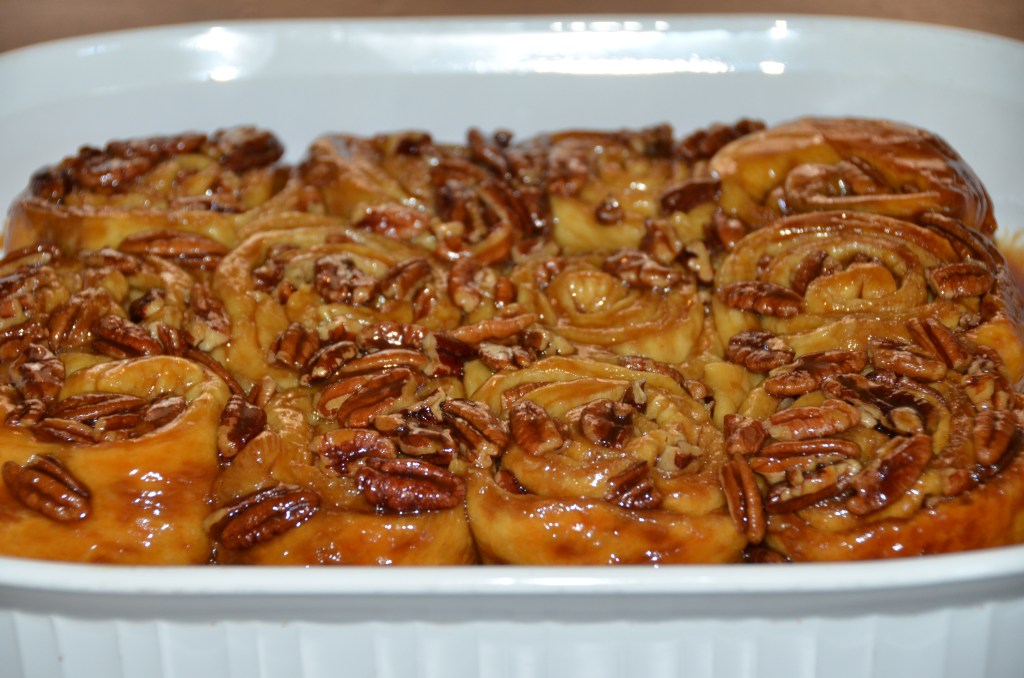
    The second batch of buns in all of their sticky glory!

    The recipe rundown- adapted from Crumbs and Nibbles!! (Follow measurements from the original recipe for dough and caramel)

    For the dough: Bloom your yeast in a stand mixer with lukewarm milk and sugar, let stand for five minutes. Switching to the the dough hook, add eggs, melted butter, then flour in small increments. Then add your salt. Knead for several minutes (5-7) until your dough is stretchy and springy. Place in a lightly oiled bowl, cover with plastic and let proof for at least an hour (we kept ours going for about two).

    For the caramel: When your dough is just about ready, start your caramel. Combine butter, heavy cream and honey until melted, then add your sugar. Whisking constantly, monitor the temperature until you hit 230 degrees and pour your caramel into a baking dish (about 8×12), letting it coat the sides and bottom. Sprinkle a generous amount of pecans directly onto the caramel and set aside.

    For the sugar mixture (adapted from Baker by Nature): Mix 2/3 cup of brown sugar and 2/3 cup of granulated sugar in a small bowl with 3 teaspoons of cinnamon and a pinch of salt. Melt about half a stick of butter.

    Assembly: Roll your dough out on a floured surface, aiming for about 18×12. Brush with melted butter until coated evenly and sprinkle the sugar mixture all over. Add the remaining pecans and roll up into a tight log. Cut 12 even rolls and place in the prepared baking dish. Cover lightly with plastic and rest for about two hours or put in the fridge overnight. Let rest an hour if in the fridge and then bake in a 350 degree oven for about thirty minutes. Flip onto a plate and let the caramel do its magic!

  • My Best Baking Playlist

    My Best Baking Playlist

    Don’t get me wrong, I have nothing against listening to a random queue on Spotify while I cook, but there is something about baking that compels me to listen to the most sing-able feel good songs. Maybe it’s because baking is so precise, you want a precisely curated playlist to go along with it. Or maybe it’s because baking can be a stress reliever, and you want an uplifting playlist to help you forget your troubles. Either way, I have come up with an all encompassing list, filled with some old, some new, a few broadway, and everything else in between. Enjoy enjoy enjoy!!! (I’ll be updating this as I think of new songs, so make sure to follow the playlist on Spotify- the link is at the bottom!)

    1.What’s Inside- Waitress

    2. Passenger- Noah Kahan

    3. Big Yellow Taxi- Counting Crows

    4. Love on Top- Beyoncé

    5. Pocketful of Sunshine- Natasha Beddingfield

    6. Fear of Being Alone- Lennon Stella

    7. Fallingwater- Maggie Rogers

    8. Crazy- Gnarls Barkley

    9. Banana Pancakes- Jack Johnson

    10. Vagabond- Beirut

    11. Evergreen- YEBBA

    12. Waving through a Window- Dear Evan Hansen

    13. Closer to Fine- Indigo Girls

    14. Mission Bells- Matt Nathanson

    15. Give a Little More- Maroon 5

    16. …Ready for it- Taylor Swift

    17. Sleep on the Floor- The Lumineers

    18. Lost in my Mind- Head and the Heart

    19. Wide Open Spaces- Dixie Chicks

    20. Two Weeks- Grizzly Bear

    21. 4EVER- Clairo

    22. You Are the Best Thing- Ray LaMontagne

    23. I Believe in US- LÉON

    24. Chariot- Gavin DeGraw

    25. How Sweet It Is (To Be Loved by You)- James Taylor

    26. Cough Syrup- Young the Giant

    27. Diane- Cam

    28. Moondance- Van Morrison

    29. Suddenly I See- KT Tunstall

    30. Baby, You Make Me Crazy- Sam Smith

    31. Dancing Queen- Mamma Mia (soundtrack)

    32. 1950- King Princess

    33. Home- Edward Sharpe & the Magnetic Zeros

    34. Love Song- Sara Bareilles

    35. Love on the Brain- Rihanna

    36. All Time Low- Jon Bellion

    37. 8TEEN- Khalid

    38. Sign of the Times- Harry Styles

    39. Here Comes the Sun- The Beatles

    40. You’re So Vain- Carly Simon

    Spotify playlist link: https://open.spotify.com/playlist/6sll9CZryChMpKjZMmB4hn?si=ajbsF0jdSTqLu_TIEmKc7g

  • Scratch-made Potato Gnocchi with Kale Pesto

    Scratch-made Potato Gnocchi with Kale Pesto

    It’s been awhile since I’ve been on the blog and let me say, it’s really good to be back! Since I last posted, the global pandemic (AKA COVID-19) has become the center of attention in most of our lives. Thanks to Corona, I was forced to leave beloved Copenhagen and am now back at home with my family. Fortunately, we have all been healthy and though the extra time has definitely proven to be a challenge, it has given me the opportunity to update the blog and do lots of cooking and writing!

    Like a lot of families I’m sure, we’ve been having trouble getting certain ingredients at the grocery store with everything going on. Though the title of this recipe is above, the real name for it should probably be “Surplus potato gnocchi and kale pesto with other veggies that are randomly in your fridge.” Not as catchy though…

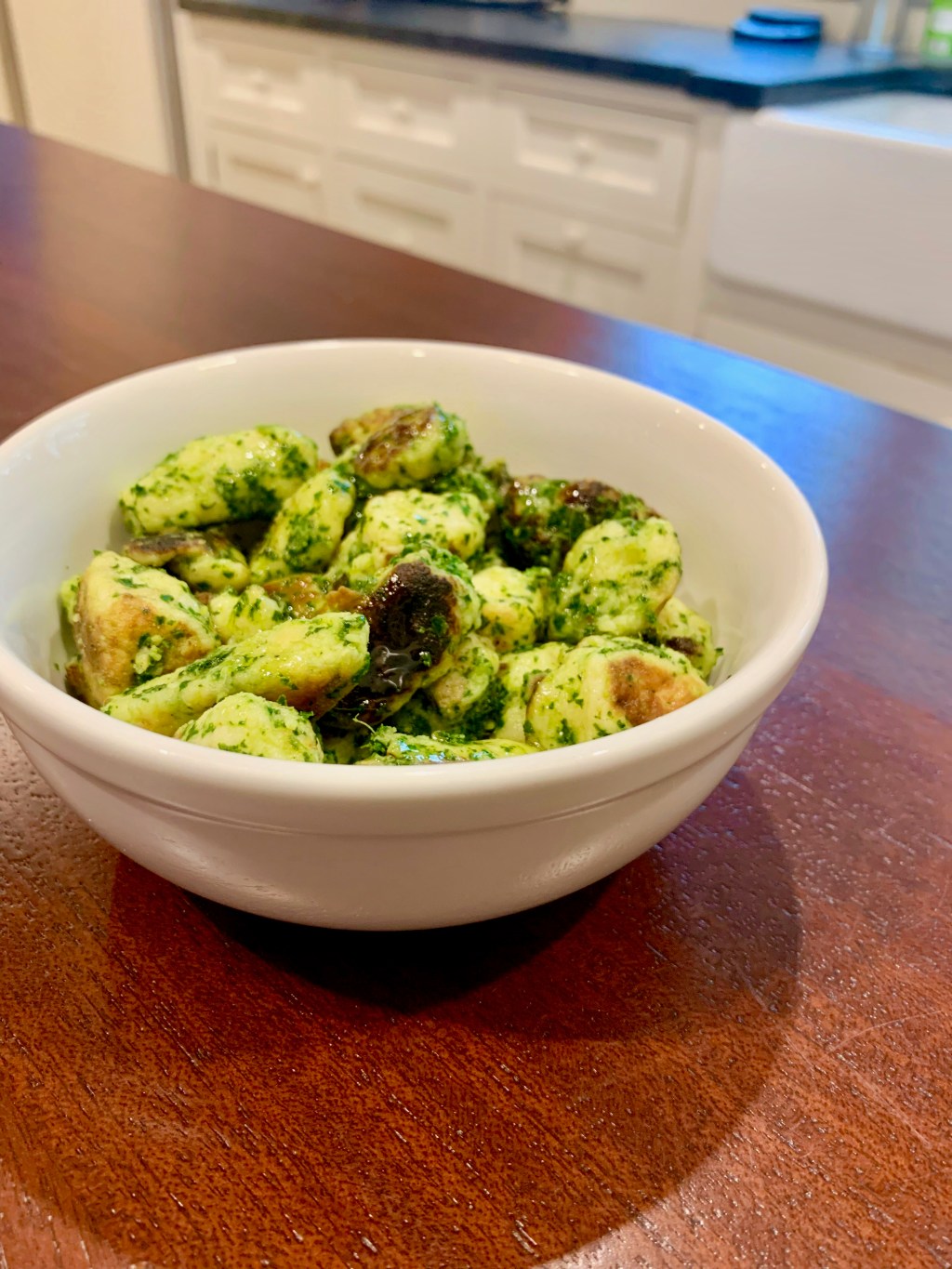
    Despite the quarantine, our CSA farm share at Siena Farms has remained open and we’ve been getting tons of seasonal produce and products each week. One thing that never fails in our weekly box has been potatoes, and thus, the idea of homemade gnocchi was born! I have always loved a big ol’ bowl gnocchi but haven’t actually made it myself in several years so I had to do some research to find a good recipe. Food & Wine provided! And every sane person knows that pasta-y dishes need a great sauce to swim in. I originally wanted to make a brown butter sage sauce, but we had no sage. Then I moved over to a normal Genovese pesto, but alas, no basil. Thankfully, my lovely sister remembered BA’s Kale Pesto, a recipe we had already discussed making. With lots of fresh kale and some other random herby things, we were ready to go!

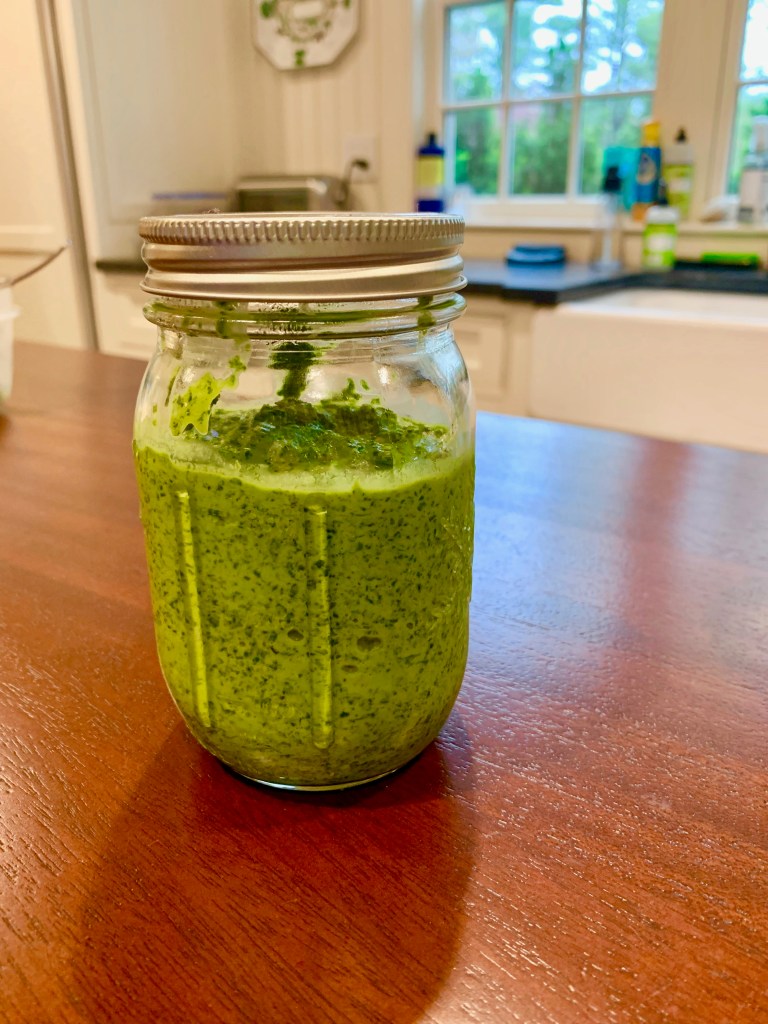
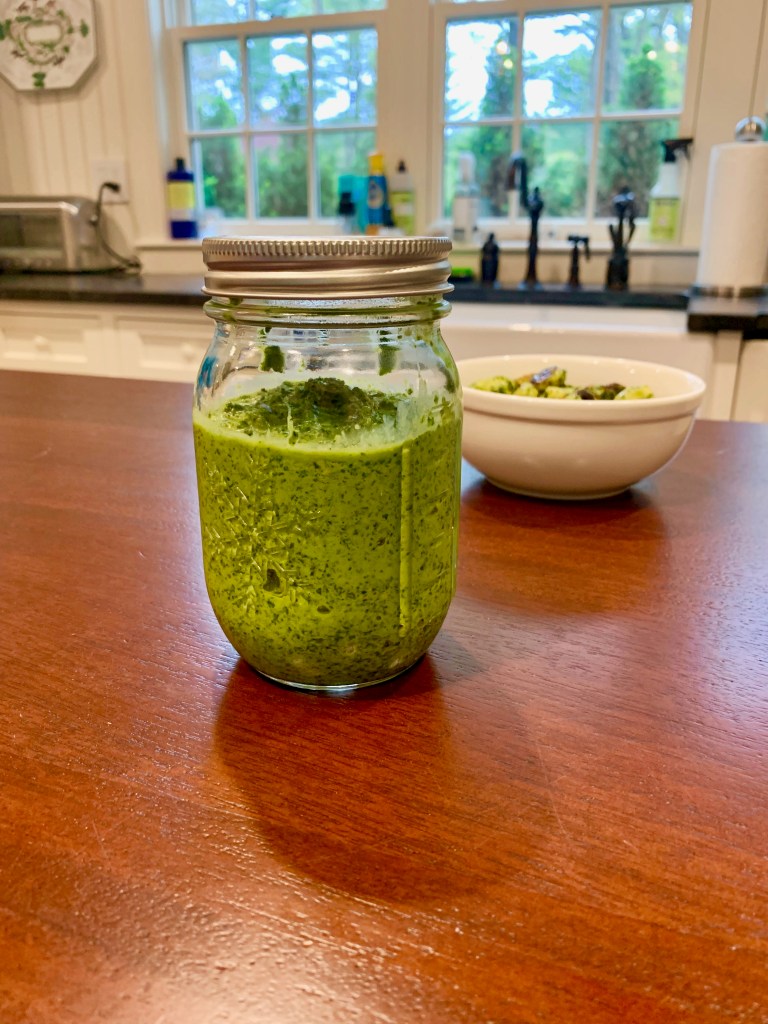
    Start by throwing lots of potatoes in a 400 degree oven for about an hour until they are tender and scoop-able. The recipe calls for 2 pounds, which is normally 4 potatoes, but because we had so many from the farm share I doubled the recipe and threw 8 small-medium sized potatoes in. While the potatoes are cooking, make the pesto! Start by boiling a pot of water and blanching your prepped kale for about 30 seconds. While that cools, throw your oil, nuts, garlic and water into a blender and pulse until smooth.

    *Now would be a good time for me to talk about the substitutions/additions I made (because there were many). Unfortunately all the pistachios had been eaten in my house, so I used almonds, which were blanched and peeled so that the skins wouldn’t throw off the texture. Bless my sister’s soul for helping me peel each individual almond. I wouldn’t recommend this substitution if you’re on a time crunch. Besides almonds, instead of garlic, I used a large handful of fresh chives and garlic scapes that we got in our latest CSA box, which added a more subtle flavor than the sharpness of raw garlic. Finally, I also threw in a big bunch of parsley, just because I felt like it.*

    Okay back to the recipe! Once your kale has cooled, wring out excess water and add it into the blender with parm and freshly cracked pepper. The consistency was thick, so I alternated with oil and water until the pesto was smooth but still had some body to it. Season to taste and focus on the gnocchi again. Once out of the oven and slightly cooled, halve the potatoes and scoop the flesh into a ricer. Add egg, salt and flour, then combine until a sticky stiff dough forms. On a floured surface, cut the dough into quarters and roll each ball out into long logs. The recipe says the logs should be 3/4 of an inch but you can easily eyeball it. Get your pot of water going and then cut each log into bite sized pieces. Next, roll each piece onto a fork to add texture (this step is not entirely necessary and was slightly challenging with the stickier pieces of dough). When your water is boiling, throw in the gnocchi until they rise, wait an additional two minutes or so and drain. Save a cup of pasta water for combining the sauce.In a cast iron skillet, heat oil and add the gnocchi to crisp them up. Throw a few spoonfuls of pesto into a large bowl with a bit of pasta water, then add the gnocchi and combine, adding more pesto if desired. Grate extra parm on top and enjoy! Maybe with a glass of wine too (just me?)

    Now I know what you’re thinking… that sounds like a lot of work for some potato pillows and vibrant green pesto. And you’re right. This recipe was pretty labor intensive and I’m lucky I had a few helping hands to keep me sane. But then again, we’re all in quarantine so what else is there to do? Plus, there’s something extremely therapeutic about rolling out dough, a relaxing feeling that I’ll welcome any day during a time that is otherwise filled with a lot of anxiety and discomfort. And don’t get me started on how this tasted. The bright pesto balanced out the softness from the potato, and the addition of kale as the star of the show added a bitterness to the rich dish. Though garlic scapes and chives aren’t a typical staple in most people’s houses, if you have the chance to add them, I highly recommend it in place of sharp raw garlic. Other things in your fridge that you want to use up? Spinach, herbs, shallots or other nuts would make great substitutions too! Everyone’s living in a pretty strange time, we may as well be making yummy meals and destress in the best ways we know how.

    Up next on my menu? Pecan sticky buns! Stay tuned…

  • Chicken and Lentil Soup with Jammy Onions

    Chicken and Lentil Soup with Jammy Onions

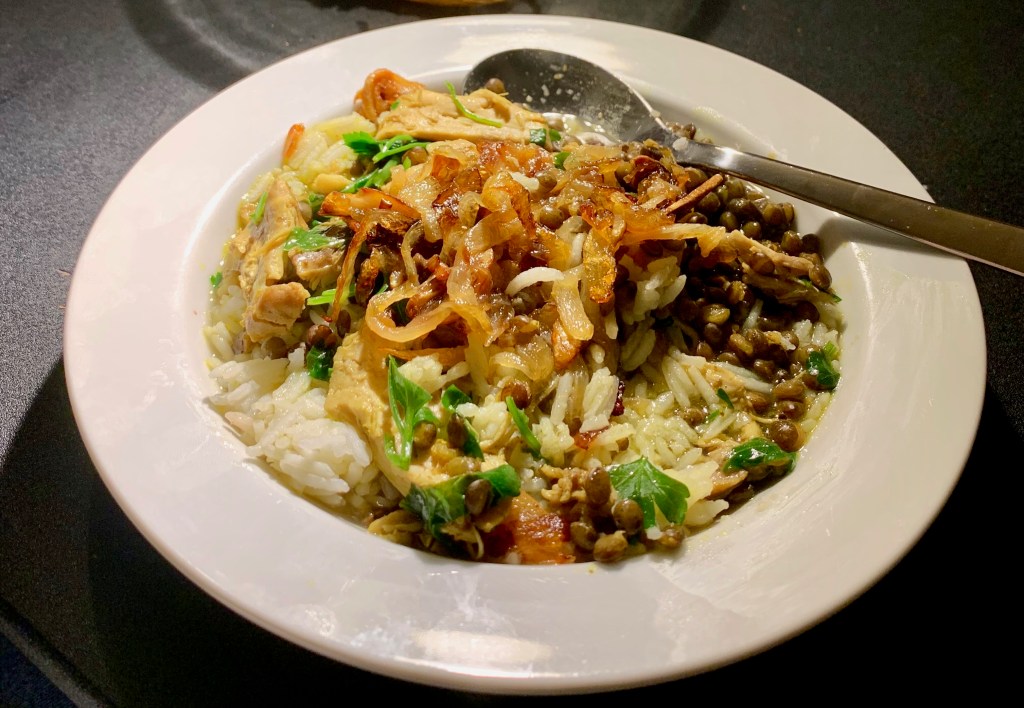
    As most Sundays go, today was a good one. I woke up slightly less exhausted than I’ve been feeling for the past week and peeked out behind the curtains to see the slightest bit of sun– an aspect of Denmark I still haven’t become accustomed to. Though most of my day was spent completing assignments and sipping a chai latte, I decided tonight was the night for a filling and hearty soup. Enter the BA test kitchen and Andy Baraghani’s Chicken and Lentil Soup.

    Let me start out by saying that cooking in my dorm room has proven to be a high risk situation. I seldom get through cooking without knocking into the stack of dishes sitting on the drying rack directly next to the stove or moving half the contents out of the fridge to find one item because the light inside doesn’t work. Oh, and one out of four burners (a big one) doesn’t work either. The counter space is so limited that I use my desk, which also functions as my makeup area, as the designated chopping station. But enough with the pity party, I’m making it work.

    Use a sharp knife (or relatively if you’re me) to thinly slice two onions and just about a million cloves of garlic to get the recipe going. Once the oil gets hot, in goes the onions and later the garlic, followed by lentils, turmeric, chicken thighs and water. After everyone joins the party, the soup simmers for what feels like a cruel amount of time if you haven’t eaten a real meal all day (read 20-25 minutes). When the chicken is cooked through and the lentils are tender, the chicken is removed from the pot and shredded before being reunited with the rest of the warm goodness. A few squeezes of lemon, a huge bunch of parsley and those jammy onions and crispy garlic finish the soup on the highest of notes. I also made a pot of basmati rice for some extra comfort, which I thought was the perfect vehicle for the fragrant broth.

    Yes, this recipe is relatively uncomplicated, but I finished cooking feeling like I had run a marathon. Tiny kitchens and makeshift equipment definitely made this one a bit harder to make, but the reward was how damn good it tasted. The recipe reminded me of home, something I’ve definitely been missing a bit since leaving the states. Maybe it was simply the act of cooking with a recipe, something I haven’t done since arriving here, or maybe it was knowing my parents would love eating this too, but this meal made me feel whole. In fact, I felt so whole by the end of dinner I had to lie on the floor in exhaustion (and satisfaction). So here’s to recipes so steaming and flavorful, that stick to your bones in the best way possible, even when they are made in dorm rooms.

  • Chao Viet Kitchen

    Chao Viet Kitchen

    Okay, don’t get me wrong, I know Copenhagen isn’t famous for their Vietnamese food… but I really fell in love with this tiny spot just a street away from all of my classes. Though the menu is equally as small as the location itself, the bright flavors and cozy dishes will completely eliminate any misgivings someone might have about the food here. In fact, it’s so incredibly good, I’ve actually already been twice in two weeks (so HAH).

    But let me take you back a minute. My discovery of this lovely little place actually came on the heels of one of my harder moments abroad so far. Feeling slightly isolated and in need of some genuine company (without all the small talk), I made plans for dinner with a close friend from home who also happened to be on the program. She invited her roommates and suite-mates to come along and though I felt slightly out of my comfort zone at first, the meal quickly turned into fast friends enjoying some really good food. My first meal at Chao Viet is always going to be attached with the memory of me realizing “Yeah okay, I can do this. I’m gonna be fine.” Pathetic? Maybe. Did I actually say this? Absolutely.

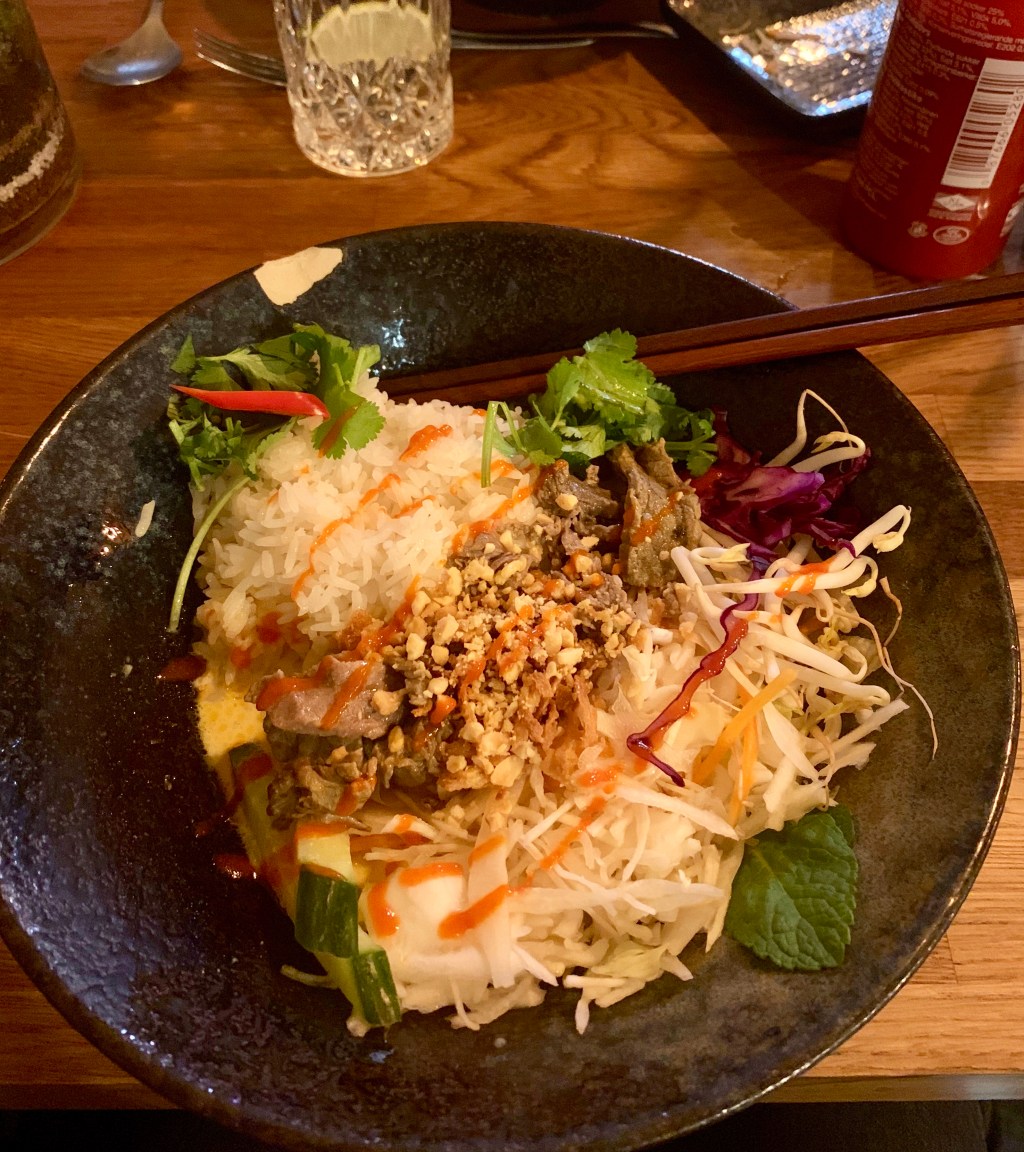
    Moving from my mental breakdown, let me get to the breakdown of the food. On visit number one, I ordered the #6, a coconut curry situation exploding with crunchy veggies, chopped peanuts, sautéed beef and pillowy rice. I doused the entire giant bowl in a healthy portion of sriracha (before I found the hidden slice of chili pepper camouflaged in my bowl) and immediately inhaled before my stomach could realize what it was in for. And let me just tell you, I was done so fast I easily could have ordered another… which I did not do because I was with new friends and did not want to terrify them. Needless to say, this curry was insanely delicious and flavorful and warm and comforting, just what I needed to lift my spirits and bond with my friends.

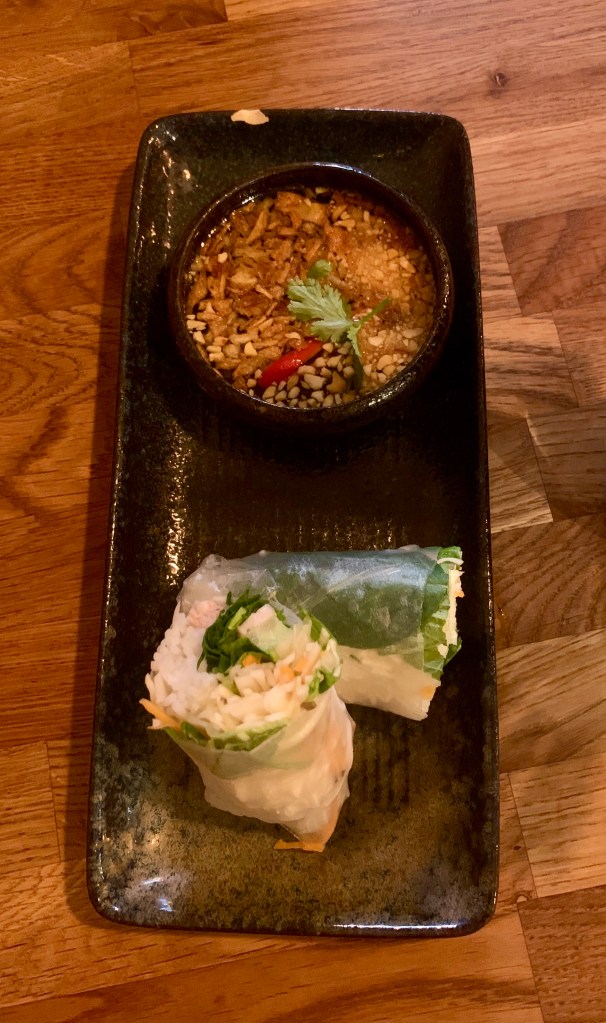
    On my second visit, I again ordered the #6, because I’m not a monster. But, my friend and I also ordered a massive spring roll with crispy pork, snappy vegetables and rice noodles. The killer aspect of the dish though- the dipping sauce. Some combination of fish sauce and soy and cilantro and chili and peanuts made both of us want to start slurping straight out of the bowl. Our only complaint after eating the rolls? We had leftover sauce and nothing to put it on. An absolute shame. Next time, we’ll bring our own bottle to save it for later…

  • 7 Oatmeal Pancakes and 1 High Fever

    7 Oatmeal Pancakes and 1 High Fever

    This past weekend was to put it bluntly… BAD. After booking a trip to Scotland with my best friend over a month ago, I woke up on Friday morning with a horrible fever and could barely stand up. Suffice to say, I did not go to Edinburgh and had to watch my friends enjoy the trip I planned while I shivered in my twin bed. Not fun.

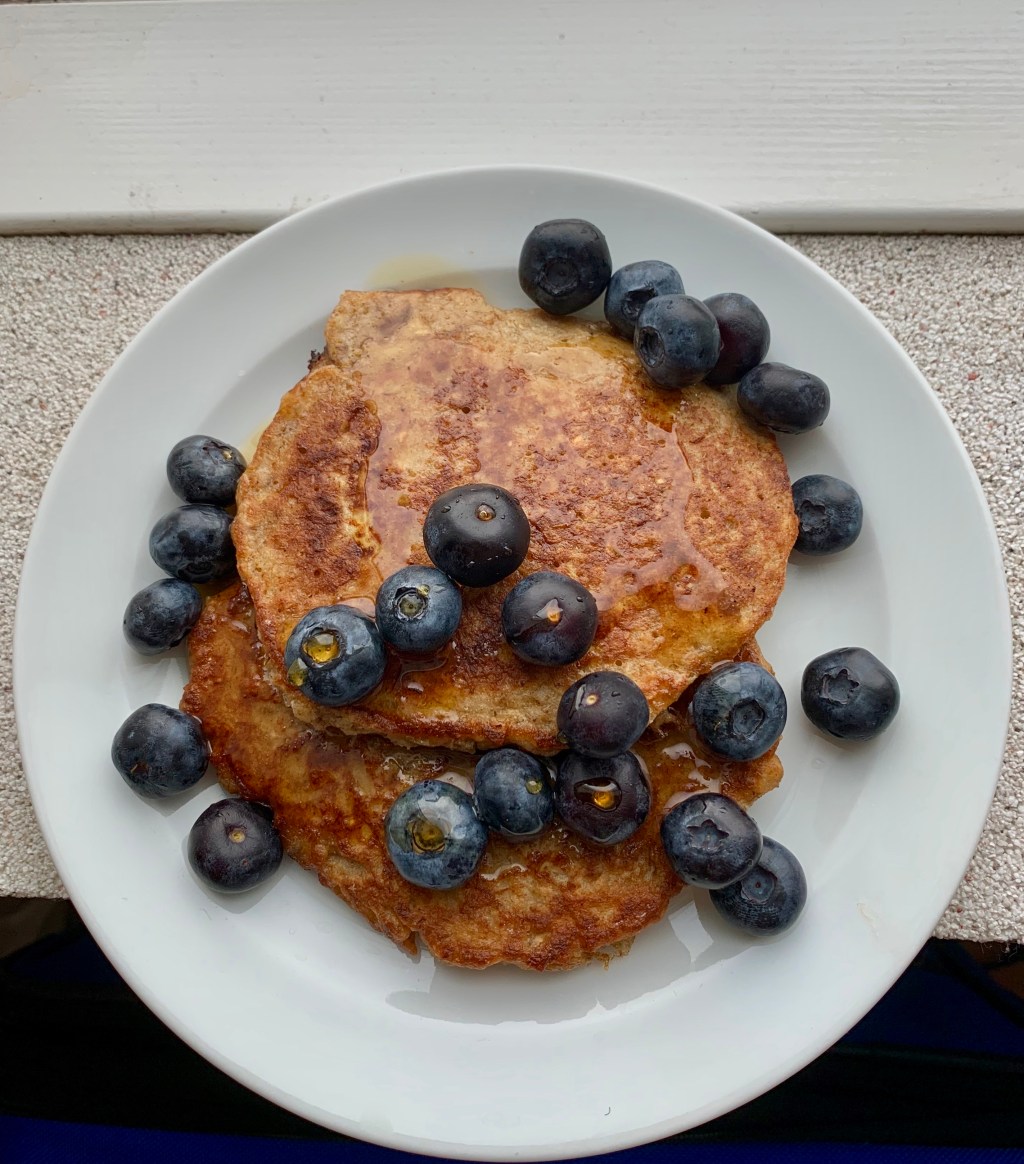
    But! Not all was lost, because I woke up feeling much better on Saturday morning and was craving pancakes. Though I had to take a slightly feverish journey to the supermarket across the street to get some ingredients, I set out to make syrupy oatmeal pancakes and boy did I succeed.

    The recipe (adapted from The Kitchn):

    Combine a cup of gluten free oats and dairy free milk in a medium bowl and let soak for 5 minutes. Melt a tablespoon of butter and add to the mixture, followed by 2 whole eggs, 3/4 of a cup of gluten free flour, a tablespoon of maple syrup and a teaspoon of cinnamon. Mix, mix, mix. Heat a skillet with butter and spoon the batter onto the pan until it bubbles. Flip and enjoy with lots of syrup and fresh berries! I got about 7 good sized cakes out of one batch.

    Let me add here that the original recipe calls for baking powder and sugar, but due to me not speaking danish and being unable to find both of those ingredients, I had to adapt. Thankfully, the recipe still worked quite well and I didn’t find the lack of baking powder to be problematic. You can also add a pinch of salt to offset the sweetness, though I highly recommend avoiding flaky salt (which was the only salt I had on hand). Getting one big bite of salt in a otherwise perfect pancake is never ideal.

    Here’s to pretty awful weekends becoming a whole lot better with golden crispy pancakes filled with oaty goodness. I won’t blame you if they only last you 24 hours, they’re that yummy!